Thursday, July 7, 2022

Narrative

 I believe students learn best when they feel connected to their learning environment and are given authentic opportunities to collaborate and communicate with their peers in a structure that is responsive to their lives.

For my final project, I decided to make a website. I know, I know. How cliche, right? A teacher takes a class on digital media literacy and decides that the best use of her time moving forward is to make a class website. Real original. And yet, after watching Simon Sinek’s TED Talk “How great leaders inspire action” I was confronted with asking myself why I teach in the first place. 


From a business perspective, Sinek repeatedly tells the audience that “people don’t buy what you do, they buy why you do it” (2010). Sinek asserts that the only reason people follow the leadership of one individual over another is due to that individual’s outward communication of their beliefs (as opposed to their title and power in the world). We listen to, and get inspired by, individuals who communicate their beliefs because at a biological level, we connect with what they say–their beliefs align with our own. Once this connection is made, we are willing to follow their lead. In terms of teaching, this is exactly what I suspect the majority, if not all, teachers hope for: that they can inspire their students to learn from them in spite of any obstacles that may impede their learning. So, I had to ask myself,  what is my “why” anyway?


In order to get there, you need to know a bit more about me. Raised in Pawtucket, Rhode Island, I am a product of the Pawtucket Public School system. Depending on what part of Rhode Island you're from, you either see this as a positive or a negative fact.


Let’s start with the negative: Pawtucket is often referred to as “the bucket”. The stereotype I often encountered as a child (and still encounter to this day as an adult) is that Pawtucket is where people of little “worth” live. It’s trashy. What I know now that I didn’t know as a child is that this negative bias towards Pawtucket is a coded way of describing the average population of Pawtucket as racially and economically deficient. Which brings me to what I want to highlight as a positive: Pawtucket is a place of culture. Certainly, there are issues that need to be addressed within this community but I’m more concerned about making clear here in this post, that what outsiders of this community like to pigeon-hole as deficits are actually major strengths. Thanks to the diversity of Pawtucket, I grew up learning alongside people who were externally as well as internally different from me. Coming from a monolingual, conservative, working class household, my time in school enabled me to develop relationships with people across lines of differences repeatedly throughout my entire educational career. 


It was only until college that I realized this was not the norm for everyone.  I learned from many of my white, female roommates that attending URI was a bit of a culture shock for them because it was the first time in their lives that they had been around so many people of color. I recall myself being stunned when I heard this because as someone who just finished her TD Summer Program (iykyk), I felt like I was suddenly around A LOT of white people and often wondering where all my friends from Pawtucket and Central Falls had retreated to while on URI’s Kingston campus. 


And this is where I need to go back a bit more. Until high school, I had never imagined myself being a college student.  Although I grew up in a double-income household, with  supportive parents, I was often left to my own devices to figure out how to navigate the world around me, so much so that when my brother was born, I quickly learned how to become both sister and caregiver. Thankfully there is a seven year age difference between us, but, what I need you to understand is that this difference required me to step up in ways that influenced the future I envisioned for myself.  Although my parents never forced me to work, I was expected to assist with household chores: dishes, laundry, house cleaning, dinner, watching my brother. This new life of mine never struck me as odd, though. All of my friends had similar situations as well. So, I just assumed this is what life was like: you work, take care of your family, repeat.


In high school, my understanding of myself and the world shifted. This influence is largely due to the educators who were a part of my life during this time. Like many of the TED Talks we have watched this summer, my high school educators crafted learning spaces that put their students’ lives forefront and center. Like Coffey  (from Rethinking Popular Culture and Media), Wesch, and Mitra, I encountered teachers who started units with big essential questions. The expectation was that by the end of each unit, we, the students, would develop our own answers to each question and that those answers would likely vary based on our experiences; not only was this difference of opinion accepted, it was encouraged.


However, it wasn’t just this new approach to teaching and learning that influenced me. The genuine care my school community provided me with motivated me to want more for myself (even in moments when I didn’t think I was capable of more). I think of Brian who called my house to ask my parents if I could join the yearbook club or Liz who often pushed me to apply to the BELL Summer Program even though I questioned my eligibility every time I worked on the application with her. I think of John who always referred to me as Dr. Mason. And Kyleen who could have suspended me when I started a petition to bring back a beloved math teacher but instead called me into her office to to praise me for my efforts. But of them all, the one who inspired me most, was Sarah.


Sarah was my advisor for all four years of high school and my English teacher twice. Sarah communicated her care for students in a variety of ways. From the set-up of her classroom (we always sat in a circle) to regularly inviting her advisory to her house to connect in a space outside of school; her actions, as well as her teaching, communicated that you mattered to her. Of all the memories I have of Sarah (and believe me, there are many), there is one I think I should highlight here to demonstrate my beliefs about teaching.


As you might have guessed by now, my high school experience changed the relationship I had with my family. High school was the first time in my life when I wasn’t going straight home after school. I was participating in multiple clubs during the school year and I had spent multiple summers in enrichment camps. My parents were no longer the only people I looked to when I needed advice. My world had widened and by my senior year, I knew I wanted it to keep widening. With some mentoring from my teachers, I came to the conclusion that college was the next best step for me. 


The story of my college decision is tumultuous. Without relaying all of the details here, know that it was the first time the perfect daughter disappointed her hard-working parents. Their response? They shut me out. The familial support I was accustomed to had been stripped away not because of death or divorce, but simply because my parents did not agree with the decision I was making. At a time when I needed guidance, I had my teachers. I can still remember the nights I called Sarah, crying, because my parents would still not talk to me. Sarah didn’t have to pick up when I called her on those nights, but she did. She gave me the love and support she knew I was missing at this critical time in my life. To this day, I am certain that my relationship with Sarah is what grounded me to keep going, even when my home environment was challenging. 


Sarah, and many of the other educators named here, redefined what teaching means for me. I am certain the relationships I developed with my teachers altered the way I saw myself, my peers, and the world around me. Their relationships helped me feel connected in a way I did not think was possible outside of my household. They taught me that relationships are the foundation for learning; that learning occurs when you are authentically connected to a community that cares about you. 


So, why a website? Next year, I am starting a new position at a new school. Outside of a few friendly faces from my hiring committee, I have yet to meet anyone else. Knowing that my first few days on campus will be pivotal in setting the tone for the relationships I develop, I have decided to create a website that I can share with my students (and by extension their caregivers) so that I can expedite the process of getting to know my students as well as provide a living resource that will help us stay connected throughout the school year. Although this website is still under construction, I envision it as playing a key role in how I connect with my students within and outside classroom spaces.


As we have discussed in this class, Prensky views today’s youth as digital natives and though I take issue with his definition of what it means to be a “digital native” I agree with his belief that our youth today “think and process information fundamentally differently from their predecessors” (Prensky, 2001, p. 1). I also know from my own experiences as a teacher that students often turn to their phones for answers rather than the person standing front of them. This is where I see my website becoming a connecting tool for myself and my new students. Although Turkle would probably shake her head in disapproval of this approach, I believe, like Wesch, that technology can enable us to connect in ways that the traditional classroom setting often thwarts. Regardless of space and time, an online community can thrive so long as people contribute to it.  


Considering Scott Noon’s stages of technology identities I’d say I'm in an active transition of being an electronic traditionalist and going towards a techno-constructivist. Coming into this class, I felt firm in my electronic traditionalist identity: I primarily used technology to streamline my instruction (as well as to cut-down on paper). However, I now see that I can use technology as a way to build community with my students. Unlike my Google classroom days, my goal for this website is to incorporate students’ insights and, if interested, welcome them as contributors to the content that gets created for this site. 


Given that I have yet to meet my new students (or even learn about the logistics of my new role) I am creating my website with mindful discretion. Certainly, I will have time with my students but what that actually looks like in practice is still unknown for me. Will I have my own classroom? Will I be pushing into other teacher’s classrooms? Will my time with my students be individualized? These are questions I do not yet have answers to. What I do know, however, is that whatever time and space I can share with my future students, be it in person or online, will be co-constructed and informed by their experiences. 


Outside of incorporating the tool Remind so that I can communicate with my students and their caregivers, my vision for this site is very much open-ended. Surely, my time in this class has given me some ideas of how this site could operate. For example, in addition to having web pages dedicated to contact information and my bio, I envision a page that houses links to students’ individual blogs. Perhaps these blogs could be a way for us to stay connected throughout the year, especially if we do not get to share time as a collective group. Or, taking into consideration the popularity of social media sites like TikTok and Instagram, we could have a page that houses photos and/or video submissions that reflect the experiences of my students as they navigate the school year. 


For now,  I am intentionally keeping things minimalistic so that students can have as much freedom to create without being stifled by my perspective. To get their creative juices flowing, I currently have the following questions on our homepage for students to consider in relation to our website’s design:


  • What does it mean to be a part of a community? (What about an online community?)

  • How do you know when you feel connected to someone or something?

  • What matters to you? to us? to the world?


Following the theme of asking our students questions (rather than giving them answers), my hope is that my students will come to their own conclusions about what they need from a class website and, through collaboration and support, create the space they envision for themselves. What this means, I do not yet know. But, like Wesch, I am willing to put myself “in the wonderful but awkward position of not knowing exactly what I am doing but blissfully learning along the way” (2010, p. 7).


** Website (published but still in the works!) **


*** Pecha Kucha ***


* SELF ASSESSMENT (Pecha Kucha & Narrative) *

Pecha Kucha


***  Click this link to view my Pecha Kucha ***

Tuesday, July 5, 2022

Preparing for Disney's Encanto

Having participated in GWS and the ENG departments at URI, Christensen’s chapter and the slide deck feel very familiar to me. Textual analysis was, and still is, my bread and butter. This is not to say that I always have the”right” interpretation of the media I consume, but rather is my way of saying that my brain is always in critical analysis mode, whether I want it to be or not. Christensen’s student’s question resonated with me deeply: “‘Don’t you ever get tired of analyzing everything?’” Sometimes, yes. But I think the bigger picture (and the one that Christensen ends with) is not to stop with an awareness of the world around us but to put that awareness into action–make a change. I think this sentiment to act collides a bit with the slides’ message to balance pleasure and critique. As Professor Bogad expressed in her video, the terms are not mutually exclusive, meaning that you can indeed critique something even if it brings you enjoyment. This concept of pleasure v. critique leads me to consider the dilemma of separating the art from the artist. Can you enjoy the work of someone if you know that that person has done terrible things to others, perhaps even whole communities? Should you?

It's easy for a conversation like this to become a battle of morals, however, I think the choice to ask questions, rather than move to automatic censorship is a step in the right direction. Just like Christensen’s unit, asking big questions of the media we consume can get us to reconsider the narratives we have accepted for ourselves. Just because I’m a huge

Twilight
fan (I’m not joking) doesn’t mean I support the extra-toxic relationships the films portray. What I can do, and have done, is have a discussion about the films with others to parse out the parts that are problematic. If I feel so moved that these movies will make prospective viewers swoon at the first sign of blood-lust, then yeah, I’d be right there with Christensen’s students making my own project to inform the public about why the Twilight franchise, at it’s best, is D level viewing material for adolescent youth. And even still, I will keep my Meyer’s collection on the shelf because I know how to critically analyze the mythological world that is put forth before me.

As I ready myself for watching Encanto tonight, I know that I will be coming to this viewing primed to consider the messages the film teaches us, both overtly and covertly. Having already seen Encanto, I know there are parts I will enjoy but alongside these moments, I will be asking myself about the messages the film teaches us regarding gender, race, class, and ability. Who is the hero? Who is the villain? How do these identities show up in our world? How do the representations of these tropes influence the way we understand ourselves, those around us, and the world at large? Starting there, I think, is how we can begin to make sense of this world. I would be remiss if I did not acknowledge that starting with questions is a trend we have encountered in many of our sources this summer (I'm looking at you, Wesch and Mitra).

Saturday, July 2, 2022

Overview of "Storytelling as Resistance"

For the weekend reading, I chose to read “Storytelling as Resistance” from the text Rethinking Popular Culture and Media. This chapter focused on Jerica Coffey’s re-telling of her experience teaching her students a nonfiction narrative writing unit. A major theme of this chapter is Coffey’s belief that the stories we tell define who we are (as does the absence of the stories we do not tell). Alongside teaching her students the elements of nonfiction narrative writing, Coffey set out to teach her students about the power that comes with telling one’s story, especially when that narrative goes against the grain of the stories being told by mainstream media (and not the people who live within the community). Thus, the main goal of Coffey’s unit was to have her students “document stories of the community that students believed were marginalized or silenced in the mainstream culture but that deserved to be recorded and celebrated as acts of resistance” (p. 301). 

As I read about the steps Coffey took to prepare her students to craft their final narratives, I was frequently reminded of the TED Talks by Wesch and Mitra. Like Wesch and Mitra, Coffey provided her students with a task that was connected to their lives. Certainly, there were specific skills and readings she taught to her students throughout this unit but the final form of the narratives were in complete control of her students. Coffey, like Wesch, provided check-points during this unit so that her students were supported during the creation of their narratives. And like Mitra, Coffey often started daily lessons with questions for her students to discuss as a group. Certainly, I suspect Coffey prepared materials and questions to direct the conversations in a specific direction, however, the excerpts she provides within this chapter suggests that she was also open to the knowledge and connections her students made during these conversations. She let the thoughts of her students lead the discussions and only interjected by asking more questions (rather than providing direct answers).

A final point that connects to the sources we have been reading is Coffey’s advice to her students when she noticed they were getting stuck with their interviews: “‘you just have to be curious’” (p. 305). It was here when I recalled the words of Sir Ken Robinson: “if you can light the spark of curiosity in a child, they will learn without any further assistance, very often. Children are natural learners” (2013). As Robinson made clear in his talk, our current education system is set up in a way that stifles natural curiosity. Thankfully, however, educators like Coffey (and Wesch) encourage that natural curiosity to guide their instruction. Another similarity I noticed between Coffey and Wesch was Coffey’s choice to turn the written narratives into digital stories so that they could be shared with their school community. Overall, Coffey’s unit displays how media can be used meaningfully to enhance instruction and make the projects we ask our students to complete authentic to themselves and the world around them. However, the meaningfulness of this task was not accomplished by the mere presence of media; Coffey's ongoing commitment to create a responsive learning environment that nurtured students curiosity and encouraged their discoveries along the way is, as Mitra has said, "the key" to the learning that occurred.

Digital Tool Tutorial: Remind


Hello Friends! For our digital tool tutorial, I decided to create two short videos (under 5 minutes each) demonstrating how to use Remind. I decided to make tutorials for this tool because I am planning to use it going into my new school as a main form of communication with my students and their caregivers.

 Prior to the pandemic (and certainly during it), I always used up my personal phone number to contact my students and their parents/family members/ caregivers. As you might guess, giving out my personal number came with pros and cons. The upside, I had everyone's contact information in my pocket and could easily text or call someone within seconds. The downside? They could do the same. 🤣 

So, given that I am still receiving texts from students despite being out of school for almost a week (I wish I was kidding but I'm not) I am looking forward to having this tool set-up for the beginning of the school year so that I can bring back some boundaries around communication between school and home. 

**A small disclaimer** As I mention in my first video, this tool can be used as a website or as an app on your phone. Both videos provided below are tutorials on using the website version of this tool. Keep in mind that if you choose to create an account and/or use this tool on your phone, your experience may vary from what I demonstrate in my videos.


Part 1: Getting Your Account Set-Up

Part 2: Setting Your Class Preferences


Want to get started with your own account? Go to www.remind.com to get started!

Friday, July 1, 2022

Be Like a Grandma

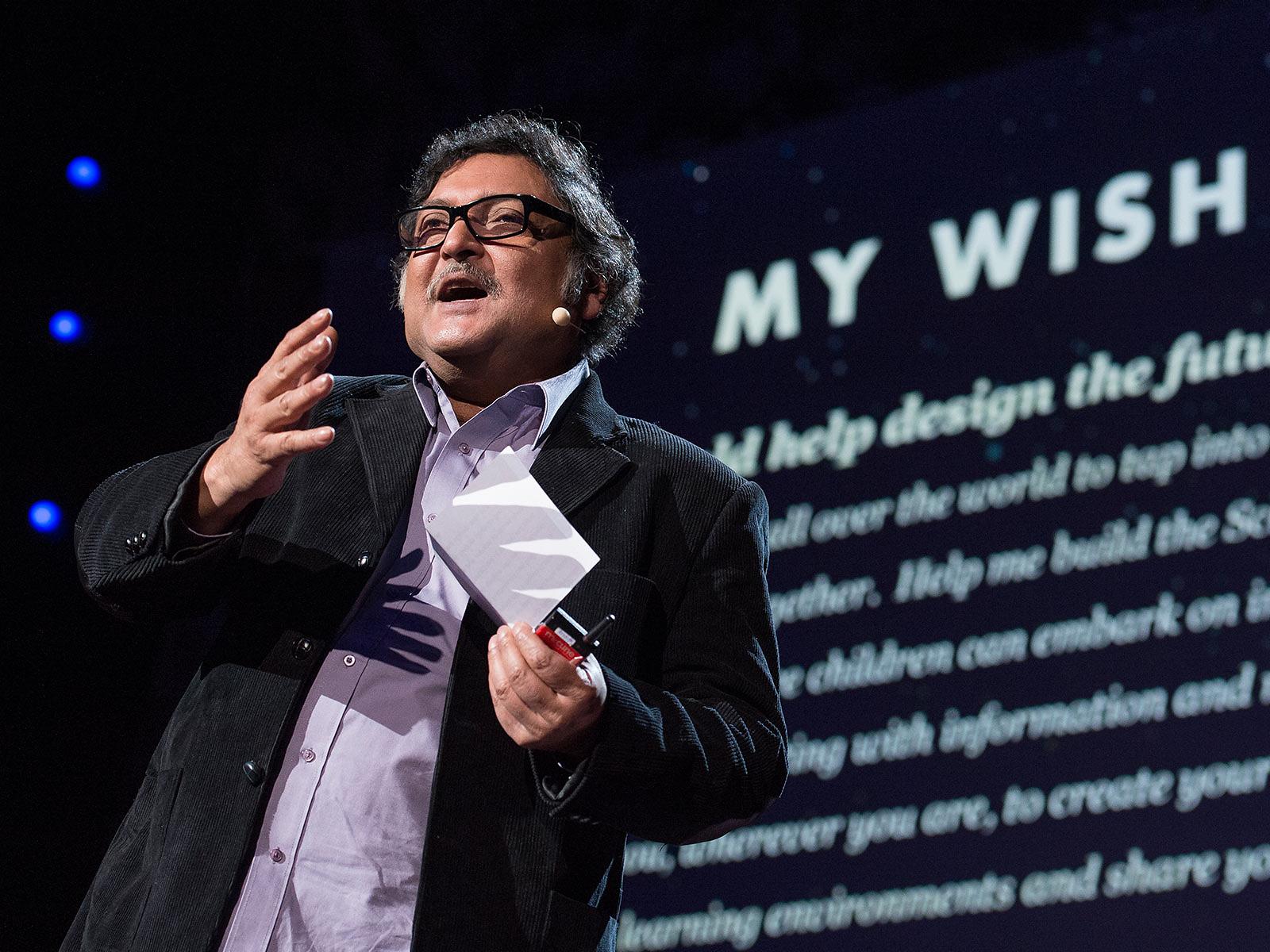
While watching Sugata Mitra’s TED Talk, I found myself nodding my head in agreement to the majority of the things he shared about his perspective of learning. So much of what he shared aligns with how I view myself as a teacher now: I am someone who facilitates learning; I am not the source of the learning that takes place. As Mitra says, “if you allow the educational process to self-organize, then learning emerges. It's not about making learning happen. It's about letting it happen.” (Mitra, 2013). 


This particular point in the TED Talk made me reflect on moments in the classroom where students’ inquiry has either been welcomed or overlooked by myself and my co-teachers. For example, I can picture those uncomfortable moments in class when a student has chosen to share their thoughts only to be met with a dismissive comment like, “that’s not what we’re talking about right now” due to our concern about keeping up with a district pacing guide. I wonder how differently these moments could have gone for our students if we had given them the chance to explore their inquiries more deeply rather than corral their thinking to meet whatever standards our scripted curriculums had set for that day. Conversely, I can also recall the moments of pure joy and engagement when we allowed our students to self-direct their learning by giving them the option to choose a research topic and/or by offering a variety of options to display their learning (i.e. via Google slides, Storyboard that, etc.) rather than asking everyone to submit the same final product.


I also agree with Mitra’s sentiment that encouragement is a powerful element of learning. I would argue too, that within his belief of encouragement being key, is also the belief that relationships matter. For example, when describing who he wants to teach youth, he identifies “the method of the grandmother” as the type of encouragement style students benefit from most. Culturally speaking, a grandmother is a figure who is warm and positive but also someone who you care about and want to make proud. I suspect Mitra’s identification of a grandmother-like figure is intentional, even if he does not say so in his talk. Students learn best from people who care for them and create an environment where they feel safe to make mistakes and learn from them. This belief makes me think of Rita Pierson (who I know has also been connected to Wesch by others in our class). 


In terms of envisioning my role as a teacher in an online environment, Mitra’s wish comes to mind most clearly: “help me build…the School in the Cloud. It will be a school where children go on these intellectual adventures driven by the big questions which their mediators put in” (Mitra, 2013). From this perspective, I am the mediator who will provide my students with a welcoming learning environment that encourages them to use technology to answer questions of their own making. This is obviously easier said than done given the way our educational system is set up. Yet, for that exact reason, is what makes opportunities for self-directed study all the more urgent.The system will continue on so long as we let it. Moving forward, I need to get comfortable with deciding when I will follow the plans my school leadership asks me to implement and when I will adapt those plans to better meet the socio-emotional needs of my students.


Final Project Brainstorm

During our in-class work time today, I crafted the following statement: I believe students learn best when they feel connected to their classroom community and/or learning environment and are given authentic opportunities to collaborate and/or communicate with their peers in a structure that is responsive to their lives.

Although a short exercise, I know what I have written today is fundamental to what I believe about learning because this statement has appeared in different forms throughout my ASTL coursework. I am thinking of the graphic novel project I completed in Learning Theory and Student Engagement, in which my main character (who is based on my first year teacher-self) comes to the realization that the more time she invests in building relationships with her students, the more engagement she sees in her classroom. And again, when I look to my philosophy of assessment from my Education Measurement and Assessment course, my belief in relationships are echoed once more: 

You have to connect, before you can correct. A colleague shared this statement with me over a year ago and it has stuck. Like this colleague, I am someone who believes that before any learning can occur, one must first get students to care about the act of learning. In my opinion, all students have the capacity to be successful, so long as they have access to the support they need to get there. To be sure, the support that students may need to be successful will likely vary based on their individual differences and circumstances, however I am certain that what must come first before any additional support can be given, is to start building a strong relationship with students (Mason, 2021, p. 1). 


This class has helped me reconsider how I can build spaces for connection and community through the use of digital tools. Like Wesch (2010), I believe learning occurs when the content and/or method of instruction is meaningful and authentic to students’ lives. Given that I am starting a new position at a new school this upcoming Fall, I am determined to create a living structure that supports my ability to build community and strong relationships with my future students and their caregivers. As of right now, I plan to improve my instruction by stepping out of my comfort zone of Google classroom and learning more about Google sites


My thought process here is that I can use this summer to create a user-friendly website that I can share with my students and their caregivers as a resource hub to stay connected throughout the school year between school and home. Given my belief of providing authentic opportunities that are responsive to my students’ lives, I want to be mindful about how much I set up/ structure prior to the school year. My main goal for the summer then, is to create a structure that will be ready to share with others while also being transparent about the *very likely* possibility that the structure may change as the year progresses as I learn more about (and bond with) my students and their caregivers. What this means, I do not yet know. But, like Wesch, I am willing to put myself “in the wonderful but awkward position of not knowing exactly what I am doing but blissfully learning along the way” (2010, p. 7).


Narrative

  I believe students learn best when they feel connected to their learning environment and are given authentic opportunities to collaborate ...