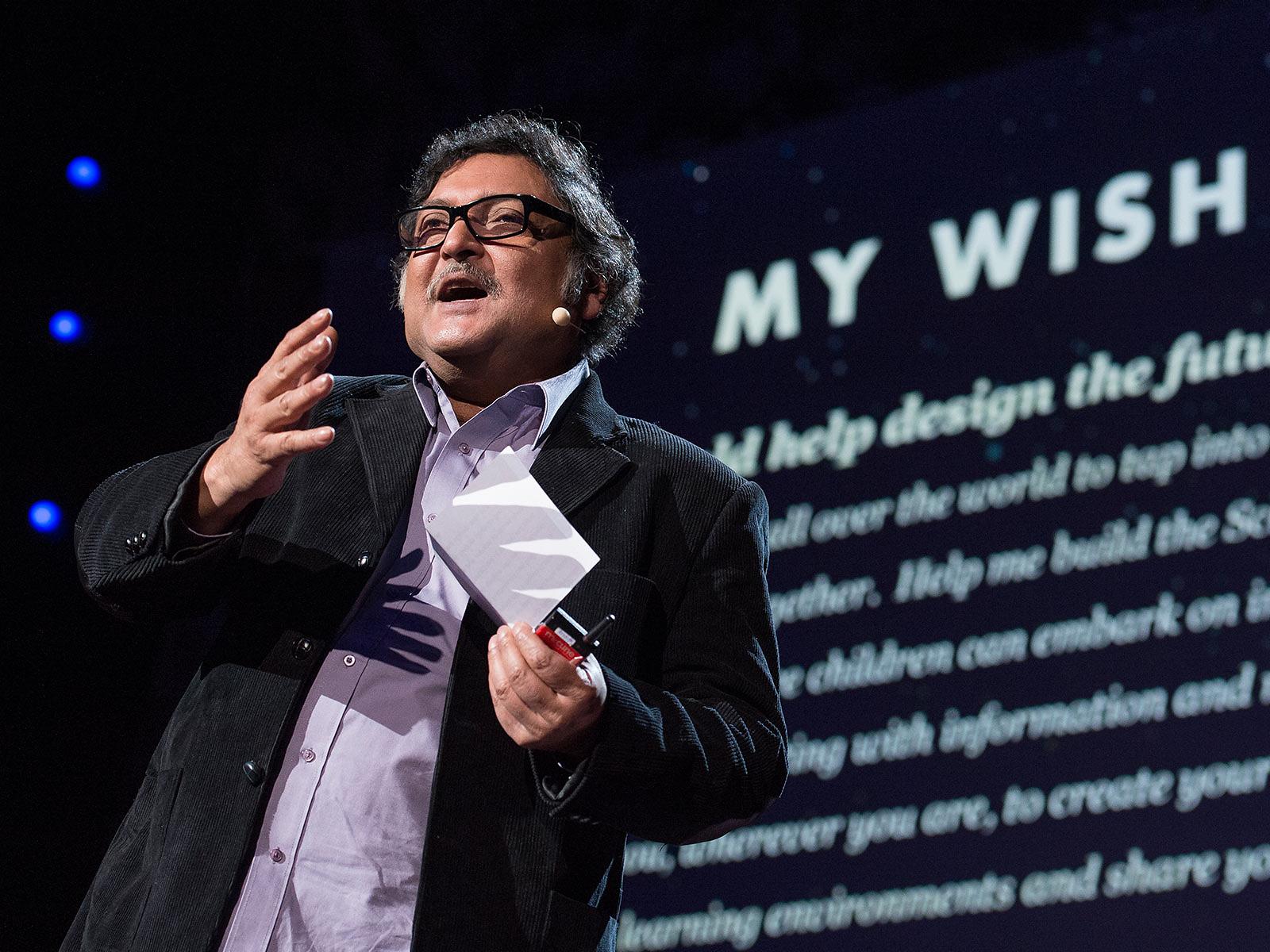
While watching Sugata Mitra’s TED Talk, I found myself nodding my head in agreement to the majority of the things he shared about his perspective of learning. So much of what he shared aligns with how I view myself as a teacher now: I am someone who facilitates learning; I am not the source of the learning that takes place. As Mitra says, “if you allow the educational process to self-organize, then learning emerges. It's not about making learning happen. It's about letting it happen.” (Mitra, 2013).
This particular point in the TED Talk made me reflect on moments in the classroom where students’ inquiry has either been welcomed or overlooked by myself and my co-teachers. For example, I can picture those uncomfortable moments in class when a student has chosen to share their thoughts only to be met with a dismissive comment like, “that’s not what we’re talking about right now” due to our concern about keeping up with a district pacing guide. I wonder how differently these moments could have gone for our students if we had given them the chance to explore their inquiries more deeply rather than corral their thinking to meet whatever standards our scripted curriculums had set for that day. Conversely, I can also recall the moments of pure joy and engagement when we allowed our students to self-direct their learning by giving them the option to choose a research topic and/or by offering a variety of options to display their learning (i.e. via Google slides, Storyboard that, etc.) rather than asking everyone to submit the same final product.

I also agree with Mitra’s sentiment that encouragement is a powerful element of learning. I would argue too, that within his belief of encouragement being key, is also the belief that relationships matter. For example, when describing who he wants to teach youth, he identifies “the method of the grandmother” as the type of encouragement style students benefit from most. Culturally speaking, a grandmother is a figure who is warm and positive but also someone who you care about and want to make proud. I suspect Mitra’s identification of a grandmother-like figure is intentional, even if he does not say so in his talk. Students learn best from people who care for them and create an environment where they feel safe to make mistakes and learn from them. This belief makes me think of Rita Pierson (who I know has also been connected to Wesch by others in our class).
In terms of envisioning my role as a teacher in an online environment, Mitra’s wish comes to mind most clearly: “help me build…the School in the Cloud. It will be a school where children go on these intellectual adventures driven by the big questions which their mediators put in” (Mitra, 2013). From this perspective, I am the mediator who will provide my students with a welcoming learning environment that encourages them to use technology to answer questions of their own making. This is obviously easier said than done given the way our educational system is set up. Yet, for that exact reason, is what makes opportunities for self-directed study all the more urgent.The system will continue on so long as we let it. Moving forward, I need to get comfortable with deciding when I will follow the plans my school leadership asks me to implement and when I will adapt those plans to better meet the socio-emotional needs of my students.


Alyssa,
ReplyDeleteI loved how you talked about the concept being about a school where children go on an intellectual adventure that is driven by big questions. That quote really resonated with me as well! Our students still need us, but our role is changing. We need to give over the reigns of learning to our students and allow them to dig deeper, make meaning, take risks, and make mistakes. This is how learning can become more engaging and meaningful to our students.